One of the practical advantages of corporate accommodation in Dublin — as opposed to a two-night hotel stay — is that you actually have time to leave. A four-week corporate stay gives you four weekends. There is no good reason to spend all of them in the city, and there are several good reasons not to. The quality of your work in week three is directly connected to how well you spent week two's Saturday. Dublin is, by European capital standards, unusually well-placed for a proper day out: the Wicklow Mountains begin within twenty minutes of the M50, the Boyne Valley is an hour north, Kilkenny is ninety minutes south, and the coastline runs in both directions from the city with DART access most of the way.
This guide is written for the corporate long-stay guest specifically — not the tourist on a three-day break. A long stay in Dublin is a different proposition to a city break: you have time to get under the surface of the place, and that includes what lies beyond the M50. Each entry below notes not just what to do, but whether the destination works for a solo reset after a heavy week, a client or colleague who is visiting Dublin and wants to see something beyond the hotel bar, or a small team that needs a proper day out together. We have ordered the five trips by effort and distance, starting with the easiest.
Howth — the easiest half-day out of the city
Journey from city centre: 40 minutes by DART. No car needed.
Howth is the most accessible escape from Dublin and, on balance, the one most worth doing on a weekday when the crowds thin out. The village sits at the end of the DART line — a single journey from Pearse, Tara Street or Connolly, with departures every fifteen to twenty minutes. There is nothing complicated about it: you arrive, you walk, you eat, you come back.
The Howth cliff walk is the main draw — a four-kilometre loop around the headland with uninterrupted views of Dublin Bay, Ireland's Eye, and, on clear days, the Wicklow Mountains to the south. The full loop from the DART station takes ninety minutes at a comfortable pace; the shorter Summit Loop (about two kilometres) can be done in forty-five. The paths are uneven in places — decent shoes, not dress shoes — and can be exposed in wind. The best months are May through September when the heather is out, but the walk is good year-round if you dress for it.
Back in the village, Beshoff Bros on the West Pier is the standard recommendation for fish and chips — the fish is from the morning's catch, the batter is light, and you can eat on the pier watching the seals. For something more substantial, Aqua Restaurant on the West Pier is the best sit-down option with direct water views; book ahead on weekends. The covered Howth Market runs every weekend on the harbour and is worth half an hour even if you are not buying — artisan food, local crafts, a reliable crêpe stall.
Corporate use cases: Howth works exceptionally well mid-week if you can take a Wednesday afternoon — the cliff walk is almost empty and the DART is quiet. It is also the easiest option when a client or visiting colleague has a free afternoon in Dublin and wants to see something that is not a pub or a museum. The pier, the walk, and Aqua for dinner is a polished three-hour programme that requires no car and minimal planning. For a solo reset after a difficult week, the cliff loop clears your head faster than an extra hour in front of a screen.
Allow: Half a day (leave Dublin at 10am, back by 3pm) or a full day if you want a long lunch and a second walk. The DART runs until midnight so there is no hard deadline.
Bray & Greystones — the coastal walk that most visitors miss
Journey from city centre: 45 minutes to Bray by DART. No car needed.
The Bray to Greystones cliff walk is one of the finest short coastal walks in Ireland and is almost entirely ignored by visitors because it sits in the shadow of Glendalough's reputation. That is good news for you. The walk runs 6.5 kilometres along the cliff edge from Bray Promenade to Greystones harbour, with views across the Irish Sea that on clear days extend to Snowdonia in Wales. It takes approximately two hours at a steady pace. At Greystones, the Happy Pear café is the right place for lunch — a long-standing vegetarian institution that does an exceptional weekend brunch and has a serious coffee operation. The DART then brings you back from Greystones in fifty minutes.
Bray itself is worth an hour: the Victorian promenade, the shingle beach, and the Harbour Bar — which has been consistently voted Ireland's best pub over the years and does not disappoint, particularly if you arrive mid-afternoon before the evening crowd. The cliff walk starts at the southern end of the promenade; there is no way to miss it.
The full loop — Dublin to Bray, cliff walk to Greystones, lunch, DART back — makes a very satisfying five-hour day that leaves the evening free.
Corporate use cases: This is the best solo-reset trip on the list — enough physical effort to actually switch off, no logistics, no driving, back by mid-afternoon. If you are midway through a long project and the weekend needs to feel genuinely different from the week, the cliff walk is the most reliable way to achieve that. It is also a good option for a partner or family member visiting for the weekend who wants to see the Irish coast without a full-day commitment.
Allow: Half a day. Leave Dublin at 10am, back by 4pm with time to spare.
Glendalough & the Wicklow Mountains — the essential full day
Journey from Dublin: 1 hour 15 minutes by car. Organised coaches available.
Glendalough is the non-negotiable day trip from Dublin. The sixth-century monastic settlement in the Wicklow Mountains valley — two glacial lakes, a round tower, early Christian churches, and a setting that is genuinely extraordinary — is probably the single most photographed place in Ireland that is not in a city. It deserves its reputation and handles it reasonably well outside of peak summer weekends.
Getting there without a car requires either the St Kevin's Bus, which runs twice daily from Dublin city centre (Dawson Street) and is the most reliable and comfortable option at around €26 return, or one of the many organised day tours that depart from O'Connell Street daily. The bus takes about one hour and twenty minutes; the tour options add Wicklow town and sometimes Avoca to the itinerary, which is worth considering if you have a full day and want more than just the valley.
Once there: the Lower Lake trail is flat, easy and passes the monastic ruins — round tower, St Kevin's Kitchen, the cathedral — in about thirty minutes. The Upper Lake and the more demanding hillside walks above it give you proper mountain scenery; the Poulanass Waterfall trail (about two hours return) is the best of the intermediate routes. The Visitor Centre at the entrance to the valley is run by the OPW and provides good historical context on the monastic settlement — allow thirty minutes if you're interested in the background.
Food in the valley is limited to the café at the visitor centre. Most day visitors bring lunch or eat in Laragh village, five minutes' drive away, where Lynham's Hotel serves a reliable hot lunch and the pub is the real thing.
Corporate use cases: Glendalough is the destination for when the working week has been genuinely draining — the scale of the landscape (mountains, lake, forest, medieval ruins in the same view) is one of those rare environments that actually resets your thinking rather than just distracting it. It also works well as a team day out for a small group on a longer project: hire a car between three or four colleagues, walk the Upper Lake trail together, have lunch at Laragh, drive back via the Wicklow coast. Two hours in Glendalough at altitude tends to produce better conversation than two hours in a conference room. It is not the right trip for entertaining a client who is in Dublin for a single day — the logistics are too involved — but for a colleague who has been on-site with you for a week, it is the right call.
Allow: A full day. Leave Dublin at 9am, back by 7pm. If you are combining with the Wicklow coast or Avoca, you will want a car or a full-day tour.
Kilkenny — the best overnight if you can manage it
Journey from Dublin: 1 hour 30 minutes by train from Heuston or Connolly. No car needed.
Irish Rail runs direct services to Kilkenny (Kilkenny MacDonagh station) from Dublin Heuston, with a journey time of around eighty to ninety minutes and departures roughly every two hours. It is the most straightforward long-distance day trip in Ireland.
Kilkenny is a medieval walled city with an intact Norman castle, a well-preserved medieval mile of historic buildings, one of Ireland's better independent shopping streets, and a pub and restaurant scene that comfortably outperforms its size. Kilkenny Castle (OPW-managed, admission around €8) is the anchor — the interior has been partly restored to its Victorian state and the parkland is free and always open. The Medieval Mile Museum in the former St Mary's Church on Parliament Street is one of the better heritage presentations in Ireland and worth two hours. Rothe House on Parliament Street is a merchant's townhouse from 1594, still entirely intact.
For food: Campagne on the Arches has been one of the most consistent fine-dining restaurants in Ireland for over a decade — book ahead for dinner. Foodworks on Parliament Street is the reliable lunch option, with local producers and a menu that changes seasonally. The Marble City Bar and Kyteler's Inn are the old-town pub standards; Left Bank on the Parade is the more modern alternative.
Kilkenny also works exceptionally well as an overnight — the Kilkenny River Court Hotel sits directly beside the castle weir, with rooms from around €120–€160 per night depending on season. A Saturday night in Kilkenny with a Sunday morning walk through the city before the train back is one of the better weekend uses of a longer Dublin stay.
Corporate use cases: Kilkenny is the strongest destination on this list for client entertaining. Campagne is the right level of restaurant for a senior client dinner — Michelin-starred, Irish produce, not intimidating — and the medieval city provides a ready-made conversation topic for the evening. The train from Heuston means no one is driving, which matters. For a team that has just delivered a project milestone and deserves a proper night out, the Saturday overnight is the format: dinner at Campagne, the Marble City Bar afterwards, a walk through the castle grounds in the morning, train home by lunch. It costs less than a London dinner with drinks and does considerably more for morale.
Allow: A full day (leave at 9am, back by 8pm) or, ideally, one night.
The Boyne Valley — Newgrange and Ireland's oldest landscape
Journey from Dublin: 1 hour by car to Newgrange. Bus Éireann service available from Drogheda.
The Brú na Bóinne complex — which includes Newgrange, Knowth and Dowth — is the most significant prehistoric site in Ireland and one of the most important in Europe. Newgrange predates the Egyptian pyramids by five hundred years. The winter solstice alignment of the passage tomb — when sunrise illuminates the burial chamber for seventeen minutes on and around 21 December — is one of the most extraordinary phenomena in world archaeology. Outside of the solstice lottery (which you can enter annually through the OPW), the site is accessible year-round via the Brú na Bóinne Visitor Centre, with bus shuttles to the monuments from the centre. Allow three to four hours for the visitor centre, the bus, the guided tour of Newgrange, and a walk around Knowth.
Getting there without a car: take the train from Dublin Connolly to Drogheda (thirty-five minutes, frequent services), then the Bus Éireann 188 or a local taxi the twelve kilometres to the visitor centre. A car is more convenient but not essential. Several Dublin-based tour operators run combined Newgrange and Boyne Valley day trips from the city centre, which include Trim Castle and sometimes the Hill of Tara — worth considering if you want the context provided rather than researching it yourself.
Drogheda itself is underrated as a lunch stop on the way back — Scholars Townhouse Hotel does a good lunch, and the town's medieval walls and St Laurence's Gate (one of the finest surviving medieval town gates in Ireland) are worth fifteen minutes on foot.
Corporate use cases: The Boyne Valley is the best option when you have a senior visitor — a client, a board member, a partner from an overseas office — who has already done the Guinness Storehouse and Trinity College and wants something less obvious. Newgrange predating the pyramids by five centuries is the kind of fact that lands well in conversation before a tour, and the site itself is genuinely impressive rather than just historically significant. It also suits a partner or spouse who has joined you for a long-stay weekend and wants a proper cultural day out rather than another afternoon shopping on Grafton Street. Book the OPW tour slots in advance — it is not the kind of attraction where you can turn up on the day and expect availability.
Allow: A full day. Leave Dublin at 9am, back by 6pm. If adding Trim Castle or the Hill of Tara, you will need a car.
A practical note for corporate guests
Most companies that book corporate accommodation in Dublin for four weeks or more are, implicitly, accepting that weekends happen. You are not expected to sit in the apartment reviewing slides. Getting out of Dublin — properly, for a day — is the most reliable way to return to work on Monday in a different mental state from how you left on Friday. That is worth planning for, not leaving to chance.
A few practical points. All five trips work best on weekdays if your schedule allows — Glendalough and Howth in particular are significantly quieter from Monday to Friday. If your project has a natural break mid-week, use it. Book the St Kevin's Bus to Glendalough and any OPW sites (Newgrange, Kilmainham Gaol) ahead — they fill, and you do not want to arrive at the visitor centre to find the next tour slot is two hours away. For Kilkenny, book Campagne as soon as you know the date — it operates on a small number of covers and fills up weeks out.
For expense purposes: the DART-based trips (Howth, Bray–Greystones) cost under €10 in transport on a Leap Card. The St Kevin's Bus to Glendalough is €26 return. Train to Kilkenny is typically €30–€40 return depending on advance booking. Client entertainment at Campagne will run €80–€120 per head including wine — comparable to a mid-range London restaurant, and considerably more memorable. Car hire for the Glendalough or Boyne Valley day trip runs €40–€70 for a day car; Rentalcars.com aggregates Irish availability. Driving in Ireland is on the left; speed limits outside motorways are lower than most visitors expect.
For weekend activities in Dublin for professionals who want to stay closer to the city, the leisure guide covers golf, tennis and running by neighbourhood. The outdoor eating guide covers the best terraces and beer gardens. And our remote working guide covers the best cafés and co-working options for days when you need a change of scene without leaving Dublin.
Which EirStay property puts you closest to the action
All EirStay serviced apartments in Dublin are well-placed for these trips. The DART-based escapes (Howth, Bray–Greystones) are most convenient from the Donnybrook and Ballsbridge apartments, which are a short walk from Sydney Parade DART station. Glendalough is equidistant from all locations by car. Kilkenny is easiest from the city-centre and Dublin 8 properties, which are closest to Heuston and Connolly stations. The Boyne Valley is most accessible from the Dublin 1 apartments — Connolly station is a twelve-minute walk.
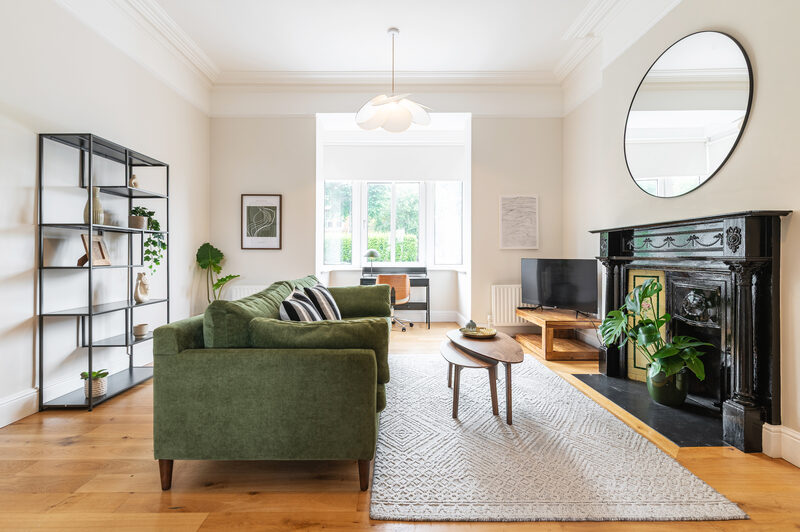
Donnybrook 1
Donnybrook, Dublin 4
Two-bedroom apartment minutes from Sydney Parade DART — ideal base for coastal day trips.
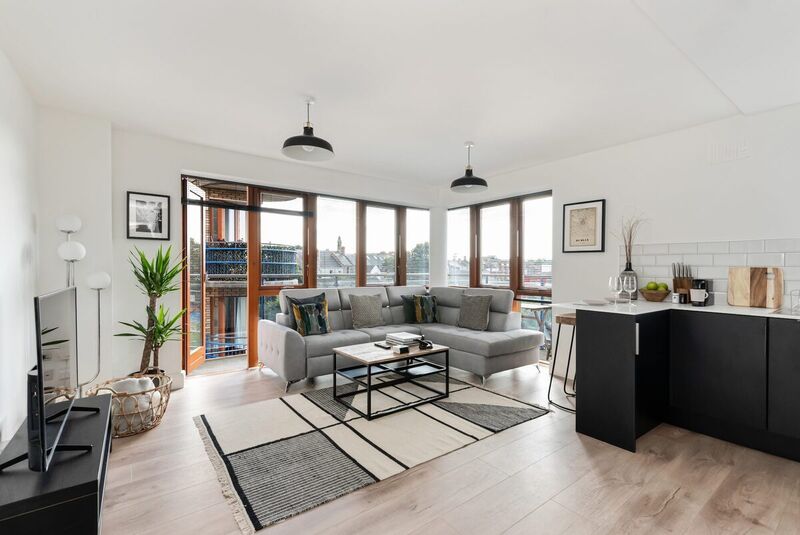
Kilmainham
Kilmainham, Dublin 8
Ten minutes walk from Heuston Station — best placed for Kilkenny and the south.
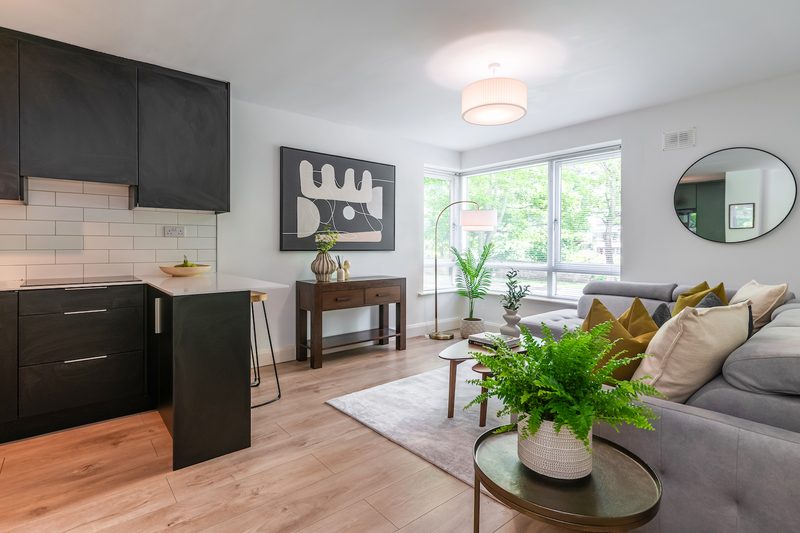
Islandbridge
Islandbridge, Dublin 8
Riverside apartment minutes from Heuston — easy access to Connolly and all main rail services.