A solo corporate move to Dublin is logistically straightforward compared to moving with children. When the family is coming too, the variables multiply: schools have waiting lists, childcare costs more than almost anywhere else in Europe, and the neighbourhood you choose determines the shape of the next two or three years of family life — not just the commute. This guide addresses the questions that Dublin-bound families actually need answered, in the order they tend to arise.

How relocating with children changes the equation
The standard corporate relocation playbook — find an apartment near the office, set up a bank account, get a PPS number — covers the basics but barely scratches the surface for families. Three things fundamentally change the calculus:
- Schools don't start on the day you arrive. Irish schools are heavily oversubscribed in most desirable areas. Primary schools in Ranelagh, Donnybrook and Ballsbridge routinely have waiting lists of two to four years. Secondary schools are similarly constrained. You need to apply before you arrive, not after.
- Childcare costs are not a rounding error. Full-time crèche places in Dublin run from €1,200 to €1,700 per month per child, depending on the age group and the area. The government's free preschool scheme (ECCE) covers 15 hours per week for children aged 2 years and 8 months to 5 years and 6 months — a genuine saving, but limited to that window.
- Location relative to school matters more than location relative to the office. Most corporate relocatees optimise for the commute. Families quickly find they are optimising for the school run — which may point in a completely different direction.
Family-friendly neighbourhoods in Dublin: where EirStay is placed
Dublin's most popular family relocation areas cluster on the southside — Donnybrook, Ballsbridge, Ranelagh, Rathgar — with strong schools, safe cycling routes, and green space within walking distance. EirStay has properties in several of these areas, which makes our apartments a natural temporary base while families find a permanent home and navigate the school and childcare registration process.

Donnybrook and Ballsbridge (Dublin 4)
The most popular choice for corporate families relocating to Dublin. Dublin 4 has a concentration of well-regarded primary and secondary schools, good private crèches, and easy access to the M50 if one parent is commuting to a suburban campus. Herbert Park (13 hectares, playground, duck pond, weekly parkrun) is a ten-minute walk. Ballsbridge has a village feel despite being fifteen minutes from the city centre.
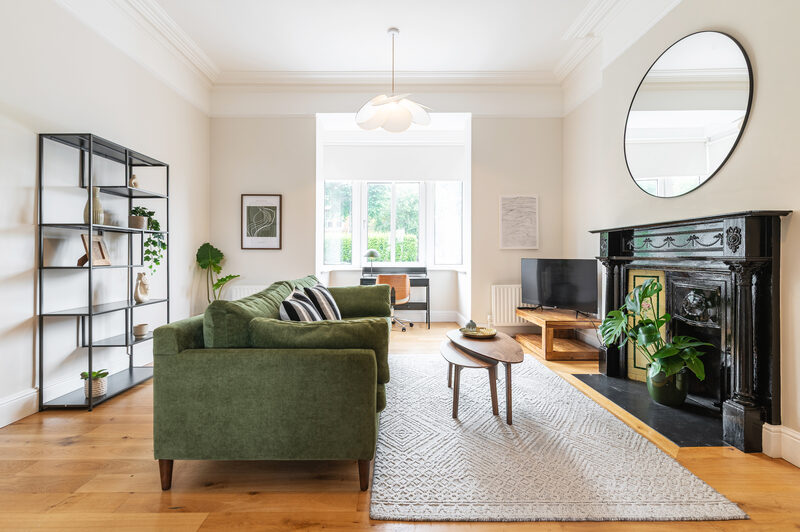
Donnybrook Apartment 1
Donnybrook, Dublin 4
Luxury two bedroom apartment in the heart of Dublin 4 with free onsite parking.
EirStay's two-bedroom Donnybrook apartment is purpose-built for the family-in-transit scenario — the period between landing in Dublin and finding a permanent home. Free onsite parking (rare in D4), a fully equipped kitchen, separate living room and two bedrooms give a family the space to function normally during what can be a stressful settling-in period. Herbert Park is a ten-minute walk; the RDS and Aviva are close for weekend sport. Minimum 14-night stay.
Ranelagh (Dublin 6)
Ranelagh is one of Dublin's most family-saturated suburbs — young families make up a significant share of the population, and the village has the café culture, playground access and school proximity to match. Sandymount beach is a 20-minute cycle; the Luas Green Line connects directly to St Stephen's Green in under ten minutes.
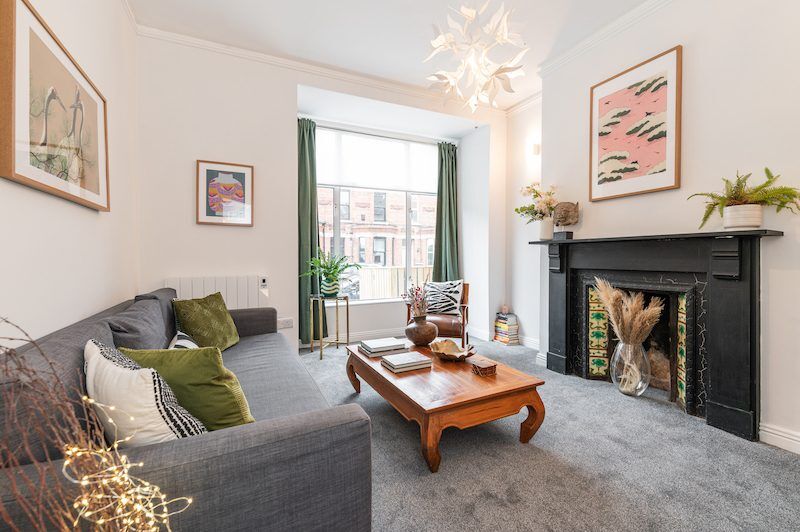
Ranelagh 1
Dublin 6
Recently renovated space in the heart of Ranelagh Village.
EirStay's recently renovated two-bedroom Ranelagh apartment sits right in the heart of the village, 200m from the Luas Green Line and surrounded by the cafés, playgrounds and schools that make D6 such a family draw. Presented to a high corporate standard, it suits relocating families who want to settle into one of Dublin's most established neighbourhoods while they search for a permanent home. Minimum 14-night stay.
Dublin 8 — more space, lower cost
Kilmainham, Portobello and the broader Dublin 8 area offer larger properties at lower price points than D4 and D6. Phoenix Park (Dublin's 1,750-acre public parkland) is close, and the area has a growing number of good primary schools. Families relocating on tighter budgets often find better value here.
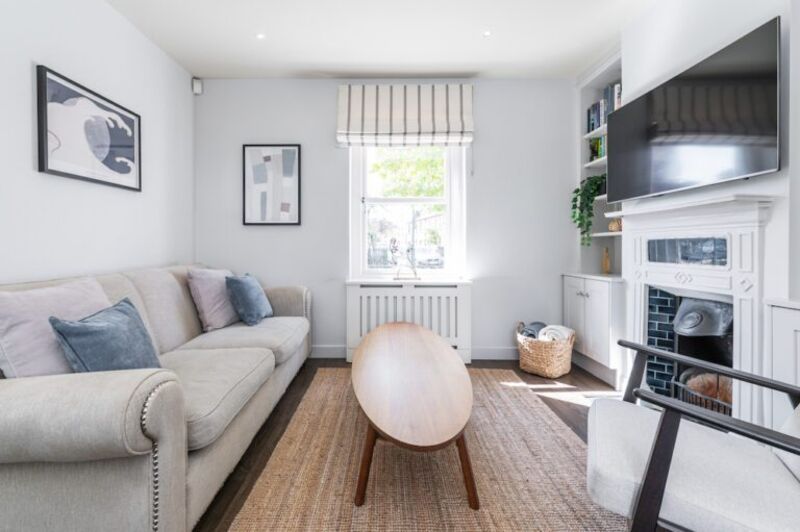
Sandford Gardens
Dublin 8
Three bedroom home with private garden, ideal for corporate relocation and families.
Sandford Gardens is EirStay's only three-bedroom property — a full house rather than an apartment, with a private garden. It's the option we recommend most often for families arriving with two or three children who need bedroom separation and outdoor space. The private garden matters more than it sounds when children need somewhere to decompress after a long day. The area is walkable to Ranelagh village, and the Luas at Beechwood is five minutes on foot.
The Irish school system: what families need to know
Ireland's school system divides into primary (ages 4–12, eight years) and post-primary/secondary (ages 12–18, six years). The structure is broadly similar to the UK system, but with some important differences that catch relocating families off guard.
State schools: faith-based, multi-denominational and Gaelscoil
The majority of Irish primary schools are Catholic-ethos schools (roughly 90%), managed by local dioceses and funded by the state. They are free to attend but may give enrolment priority to baptised Catholic children — which affects non-Catholic families. Alternatives include:
- Educate Together schools — multi-denominational, values-based, non-discriminatory enrolment. Rapidly growing but still oversubscribed in urban areas. educatetogether.ie lists all schools and waiting list information.
- Gaelscoileanna — Irish-medium schools, instruction entirely in Irish. Children without any Irish pick it up quickly (immersion works well at primary level), and the schools are well regarded academically. Increasingly popular among non-Irish families.
- Community National Schools (CNS) — another multi-denominational option run by Education and Training Boards, less common in South Dublin.
Waiting lists and timing
This is the critical point. Popular primary schools in Donnybrook, Ranelagh and Ballsbridge may have waiting lists of two to four years. If your relocation is corporate-driven with a fixed start date, you need to apply to schools before you arrive in Dublin — ideally as soon as your move is confirmed, even if the start date is 12–18 months away. Most schools publish their enrolment policy (including priority criteria) on their websites; the Department of Education's school finder lists all schools by location.
International schools in Dublin
Families who prefer continuity of curriculum — or whose Dublin posting is time-limited — often look at Dublin's international school options. The main choices:
| School | Curriculum | Ages | Annual fees (approx.) |
|---|---|---|---|
| Lycée Français d'Irlande | French national curriculum (Baccalauréat) | 3–18 | €3,000–€8,000 |
| St Andrew's College | IB Diploma + Irish Leaving Cert | 12–18 | €10,000–€14,000 |
| Rathdown School | IB Diploma + Irish Leaving Cert | 12–18 | €9,000–€12,000 |
| Dublin International School | IB Primary Years + IB Diploma | 4–18 | €12,000–€18,000 |
The Lycée is a strong option for French-speaking families — fees are subsidised for French nationals and significantly lower than the fully private alternatives. For families from an IB-curriculum background, both St Andrew's and Rathdown are well established, both in south Dublin and within range of D4 and D6.
Childcare and preschool: costs and the ECCE scheme
Ireland's childcare sector is privately run and expensive by European standards. Budget accordingly:
- Full-time crèche (0–12 months): €1,400–€1,700/month in south Dublin. Higher cost for younger infants.
- Full-time crèche (1–2.5 years): €1,200–€1,500/month.
- ECCE scheme (2 years 8 months to 5 years 6 months): 15 hours of free preschool per week, term-time. Most crèches offer this scheme; you top up for additional hours. Full eligibility criteria here.
- Afterschool care: €400–€700/month depending on hours, usually provided by the school or a nearby childcare provider.
- Childminder (in-home): €15–€22/hour, or a weekly flat rate for full-time. Childminders are exempt from VAT and are often found via word of mouth, the local parent Facebook groups, or Minders.ie.
One practical note: crèche places in D4 and D6 are almost as difficult to secure as school places. Good crèches have waiting lists of six to eighteen months. Register for your preferred places at the same time as the schools — before you arrive.
Practical admin: what's different for families
The standard Irish admin checklist (PPS number, bank account, GP registration) applies to every family member individually — children included. Key points:
- PPS numbers for children: Each child needs their own PPS number for school enrolment, the ECCE scheme and the GP medical card system. Apply at your local Intreo office or online here. Bring your child's birth certificate and proof of address.
- Child Benefit: €140 per month per child, paid to all children under 16 (and under 18 in full-time education) resident in Ireland, regardless of nationality. Apply through the Department of Social Protection once you have PPS numbers.
- GP and medical card: Register with a GP early — good practices in D4 and D6 are often full and operate waiting lists. Children from EU countries may be eligible for a medical card; children from outside the EU are generally covered by private health insurance. The HSE's GP finder lists practices accepting new patients.
- Children's hospital: The National Children's Hospital (NCH) is currently operating from temporary premises at Crumlin and Tallaght, with the permanent new facility at St James's Campus expected to open in 2025–26. For urgent care in the interim, Temple Street Children's University Hospital (Dublin 1) covers north Dublin and beyond.
Parks, playgrounds and family life in Dublin
Dublin's green space provision is one of its genuine strengths for families. The neighbourhoods where EirStay operates have strong park access:
- Herbert Park, Ballsbridge (D4) — 13 hectares, playground, duck pond, tennis courts, parkrun every Saturday morning. Five minutes from Donnybrook.
- Iveagh Gardens, Dublin 2 — a hidden walled garden with a cascade fountain and children's play area, largely unknown to visitors. Ten minutes' walk from Camden Street.
- St Anne's Park, Raheny (D5) — 240 acres including one of Dublin's best playgrounds, a rose garden, woodland trails and a miniature railway at weekends. Best reached by DART to Harmonstown.
- Phoenix Park, Dublin 7/8 — 1,750 acres, the largest enclosed city park in Europe. Deer, a visitor centre, cycling tracks and the Áras an Uachtaráin (President's residence) are all within it. Accessible by bus from most EirStay properties.
- Ranelagh Gardens — a small, well-kept park in the heart of Ranelagh village. Playground, café, and a regular weekend market in summer.
Temporary accommodation while you settle in
Most families arriving in Dublin spend their first four to twelve weeks in temporary accommodation while they find a permanent rental, get the children placed in school and childcare, and understand which part of the city actually suits them. Serviced apartments are a significantly better option for this than hotel rooms — a proper kitchen, separate bedrooms and a living room make a material difference when you are managing children's routines during a disruptive period.
EirStay's Sandford Gardens three-bedroom property is the one we most often recommend for families. The Donnybrook two-bedrooms suit couples with one child, or a parent and older child. All properties include full kitchen equipment, fast Wi-Fi, weekly housekeeping and flexible extensions on the minimum 14-night stay — so if the permanent property search takes longer than expected, you can extend without having to move.
Contact us with your planned arrival dates and family size and we'll confirm availability and send a direct quote.
Further reading
- Relocating to Dublin: What You Need to Know — the full adult relocation checklist covering PPS, banking, transport and cost of living
- Dublin Corporate Accommodation Cost Guide 2026 — what serviced apartments actually cost versus hotels for a 30-night stay
- Short-Term Apartments vs Hotels: Why Companies Are Making the Switch — the practical case for apartments on extended stays
- Working Remotely from Dublin: The Complete Guide — co-working spaces, broadband and the practicalities of working from Dublin